EdemaFlex: Textile-Based Soft-Robotic Platform Toward Personalized Hand Edema Therapy
EdemaFlex: Textile-Based Soft-Robotic Platform Toward Personalized Hand Edema Therapy
Hand edema hinders mobility and quality of life, yet prevailing solutions—manual lymphatic drainage or bulky pneumatic devices—are costly, clinic-bound, and rarely personalized. We introduce EdemaFlex, a textile-integrated soft-robotic platform that generates participant-specific devices; here, we demonstrate a tubular jacquard-knit glove whose embedded shape-memory-alloy actuators deliver programmable distal-to-proximal compression. The actuators reach a therapeutic pressure of 20–30 mmHg within 2–3 s and provide distal-to-proximal sequential compression for multiple 30 min sessions. In a seven-participant “home-based study,” the EdemaFlex glove proved to be accessible for unsupervised use and feasible as a tool to reduce swelling, ensuring safety: hand volume decreased by up to 25%, digit and Figure-of-Eight circumferences by up to 9.3% and 4.7%, range of motion increased up to 50%, and dexterity (Box-and-Block test) improved by 8–150%. The EdemaFlex System offers a textile-based, soft-robotic platform for personalized edema therapy.
Publications:
EdemaFlex: Textile-Based Soft-Robotic Platform Toward Personalized Hand Edema Therapy
Seonyoung Youn, Arhan Choudhury, Pin-Sung Ku, Wenyi Fu, Margaret Tsai, Mahika Rathod, Alyssa Pelak, Joan Stilling, Hsin-Liu (Cindy) Kao
Project Credits: Hybrid Body Lab at Cornell University, in collaboration with Weill Cornell Medicine
Research Team: Seonyoung Youn (Project Lead), Arhan Choudhury, Pin-Sung Ku, Wenyi Fu, Margaret Tsai, Mahika Rathod, Alyssa Pelak, Joan Stilling, Cindy Hsin-Liu Kao (Lab Director)
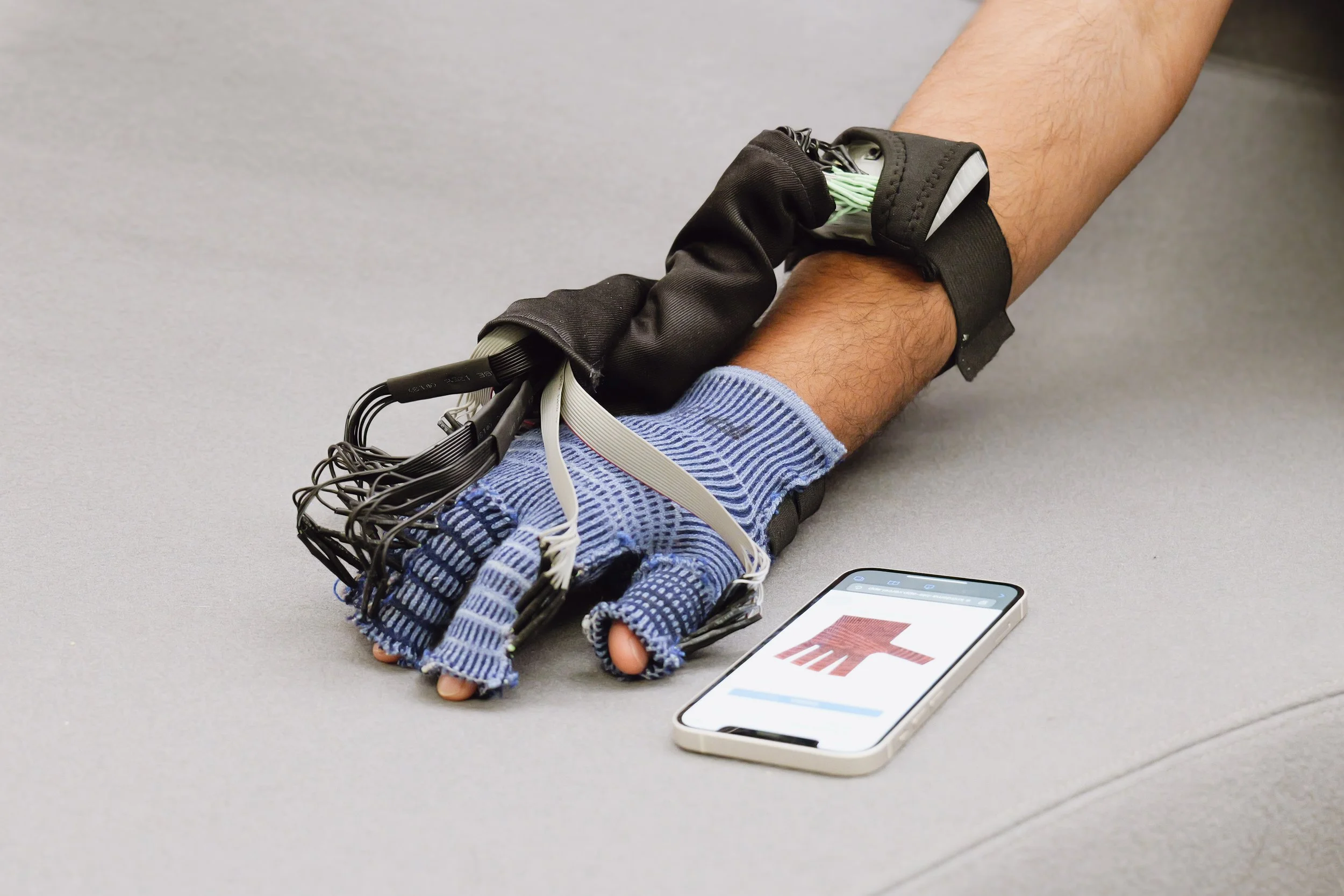
EdemaFlex consists of machine-knitted semi-glove and hardware to compress edematous hands sequentially. The device covers the whole hand and uses embedded shape memory alloy (SMA) bands to mobilize edema fluid from the fingertip to the base. (Photo: Hybrid Body Lab)
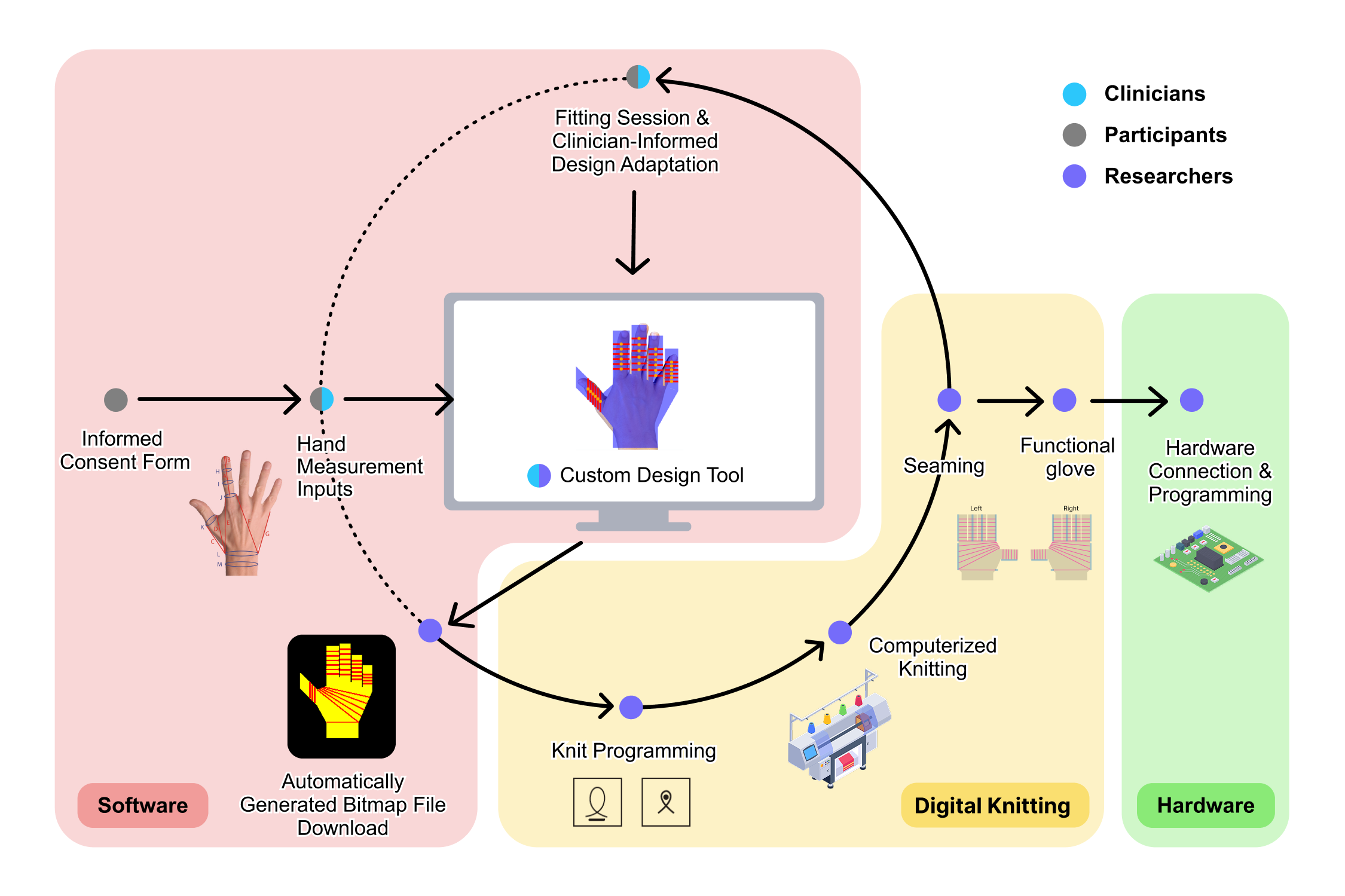
This figure illustrates the end-to-end KnitDema workflow, integrating clinician-informed fitting, computational design, digital knitting, and hardware programming into a closed-loop system. Participant measurements are translated into customized knit patterns, fabricated through computerized knitting, and assembled into a functional, programmable therapeutic glove.
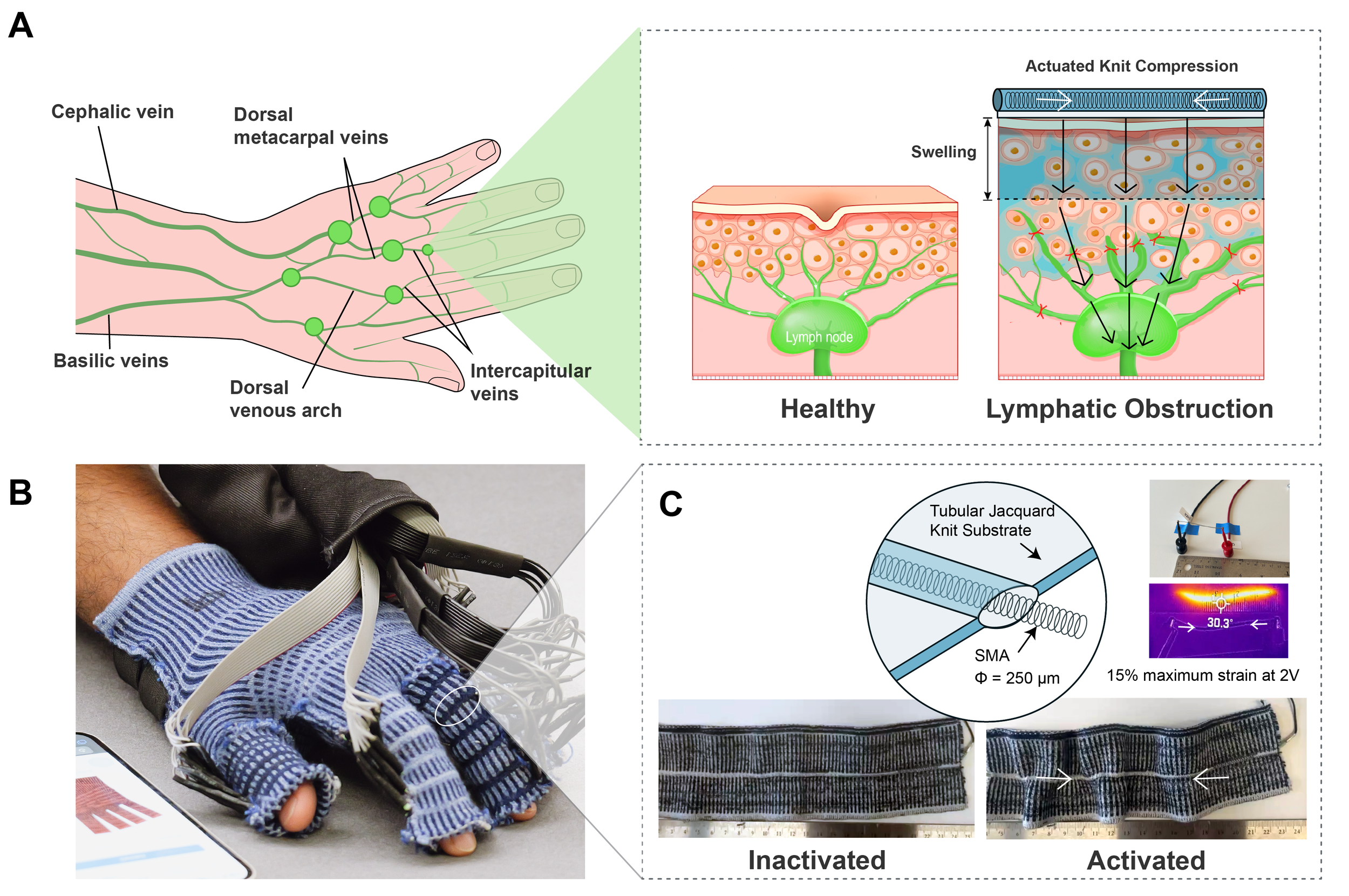
Panel A illustrates the physiological basis of hand lymphedema, highlighting venous and lymphatic structures and comparing healthy tissue with lymphatic obstruction under actuated knit compression. Panel B presents the wearable prototype, while Panel C details the tubular jacquard knit structure integrated with SMA actuators, demonstrating controllable contraction and up to 15% strain upon activation. (Photo: Hybrid Body Lab)
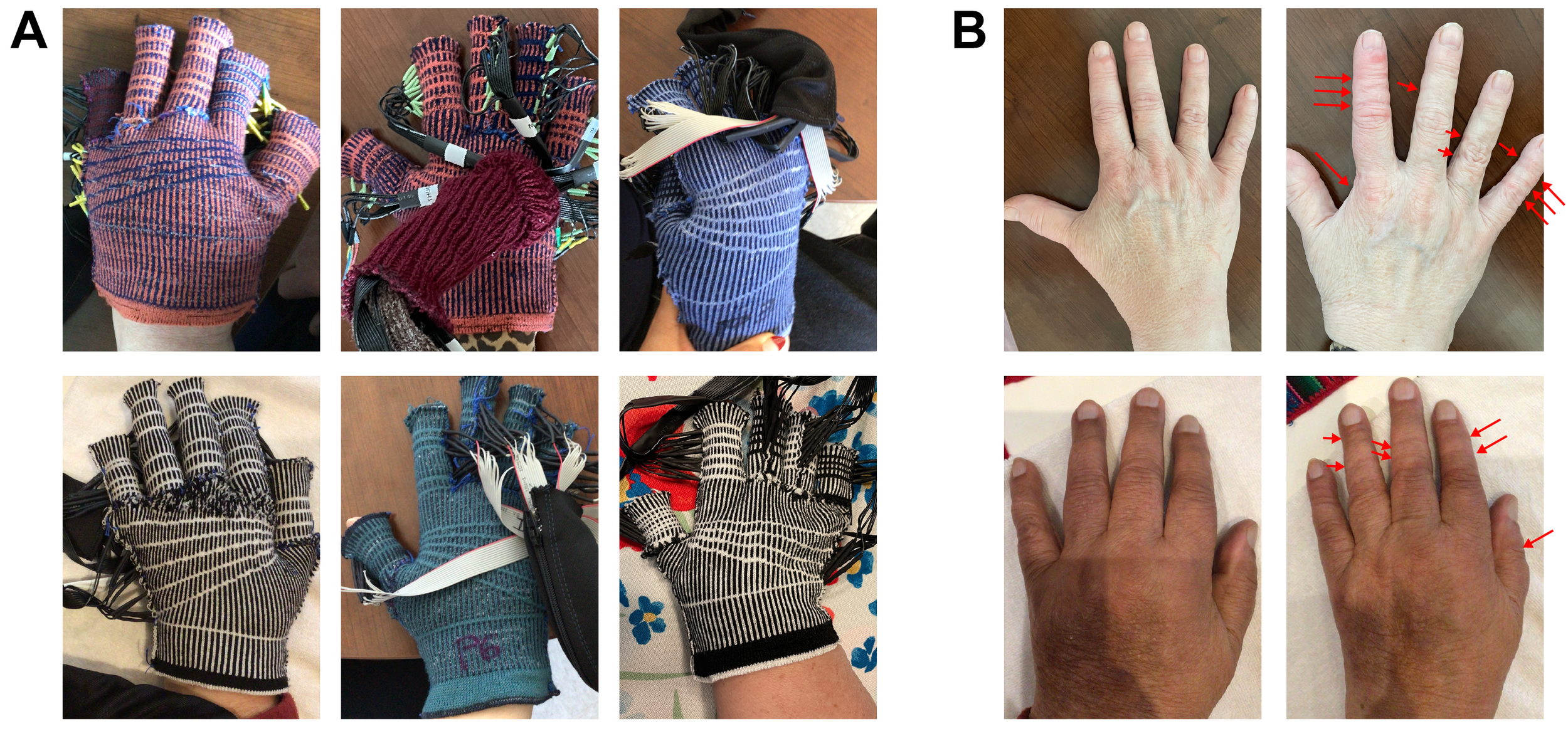
Figure A shows participants wearing the EdemaFlex textile-integrated therapeutic glove, highlighting the knitted structure and embedded actuation components. Figure B presents representative pre- and post-use hand conditions, demonstrating visible reduction in swelling and improved contour definition following EdemaFlex intervention. (Photo: Hybrid Body Lab)
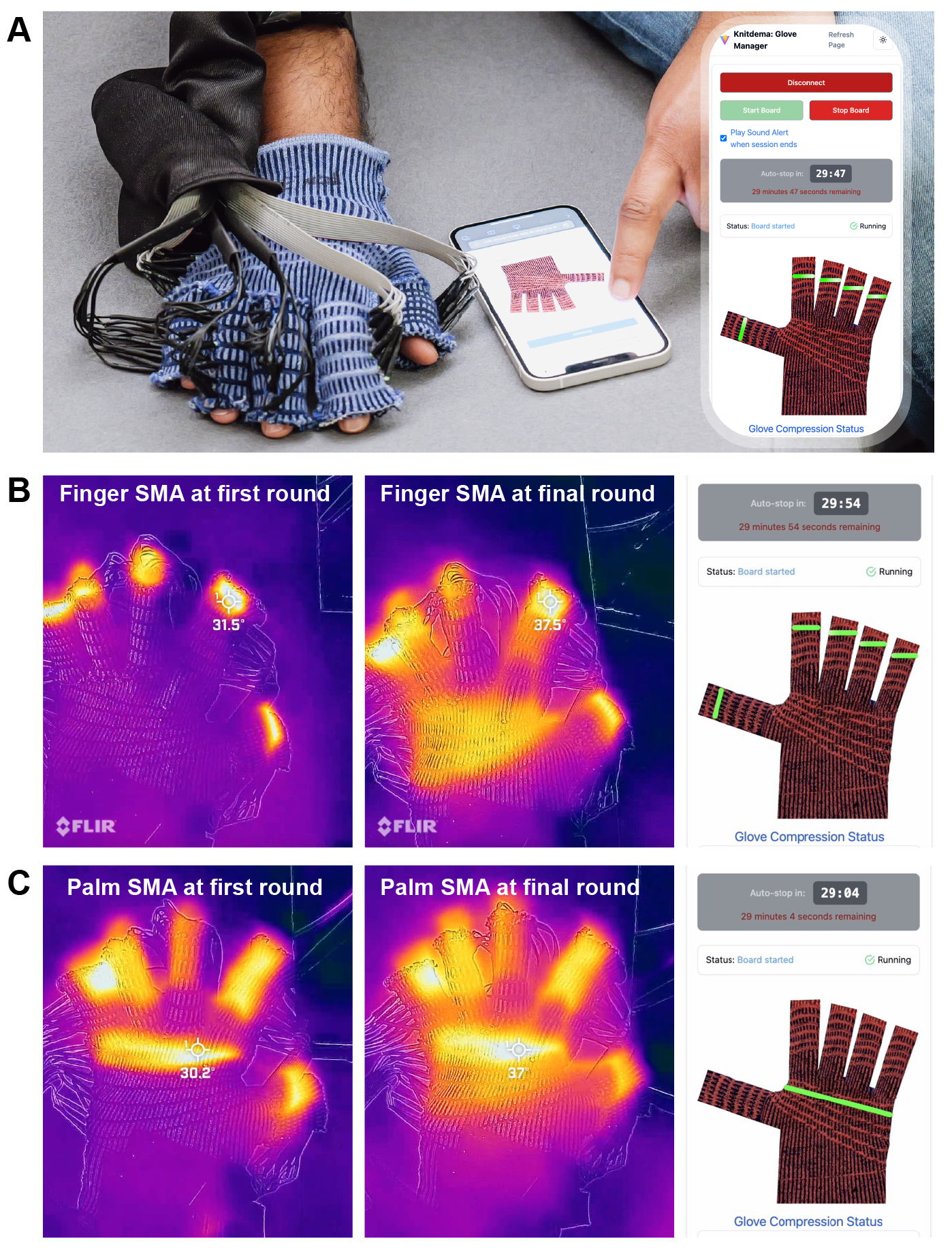
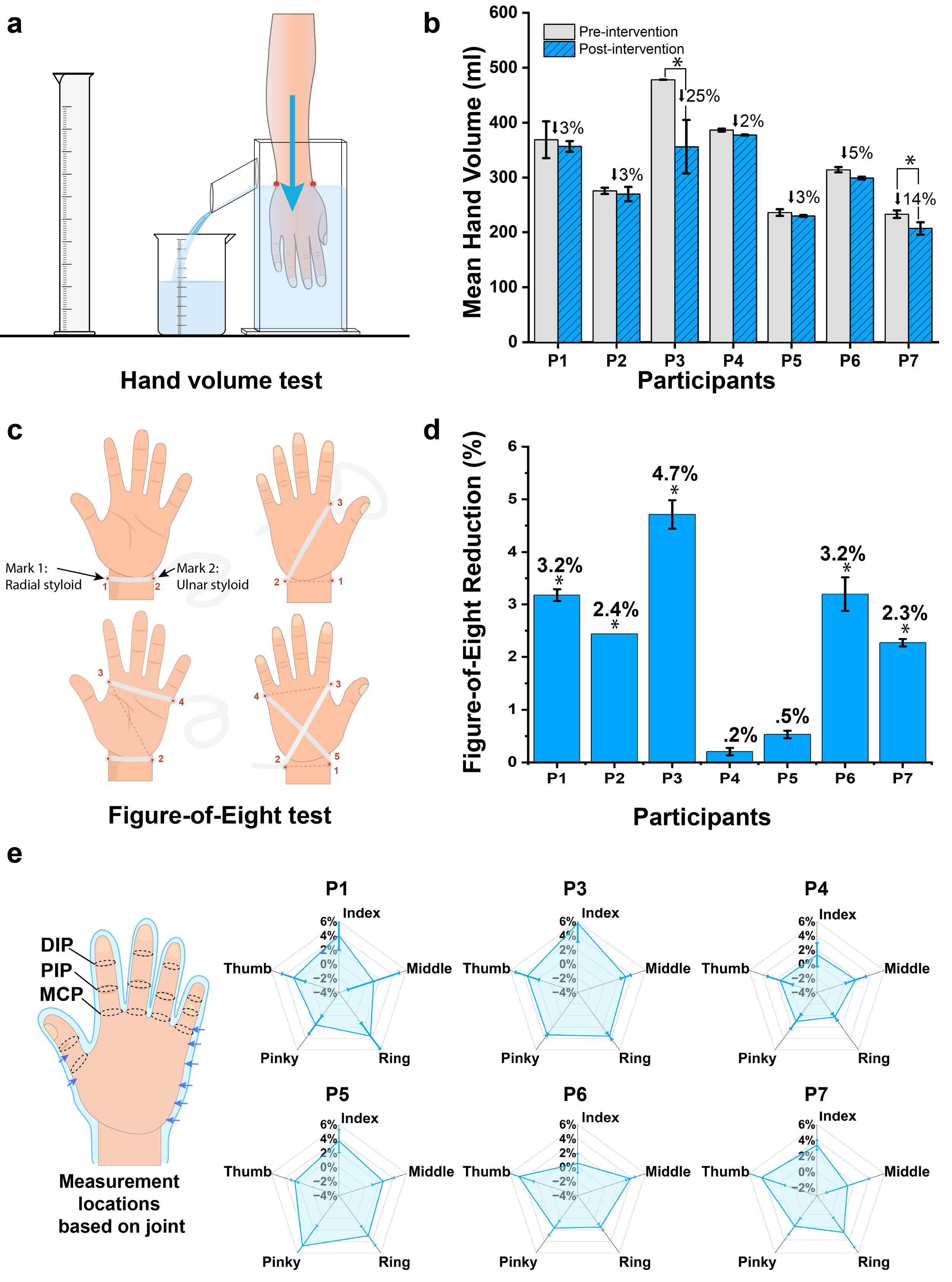
Figures A–C present thermal camera testing of EdemaFlex during operation, demonstrating controlled heat distribution and confirming that the device maintains a safe temperature range during activation. Figures a–e illustrate patients’ hand conditions before and after using the device, showing clear and consistent reductions in swelling, with measurable decreases in hand volume and circumference following intervention. (Photo: Hybrid Body Lab)
Acknowledgements
This project was supported in part by the Cornell Multi-Investigator Seed Grant 3223364 and the Pinetops Foundation. We acknowledge Amy Zhang for assistance with textile assembly, Ashwin Rajarajan for effort on a previous version of the software, Alicia Chu for assistance with software and its documentation, Heather Kim for effort on an early iteration of the knit substrate, and Jacob Revelo for a prior design attempt of the printed circuit board.