Crown Sense Tutorial

TOOLS AND MATERIALS

  1. Shieldex 235/36 dtex 4 ply +B Conductive Thread

  2. SkinLink Toolkit: MCU module, 2 NeoPixel RGB LED modules, connector modules

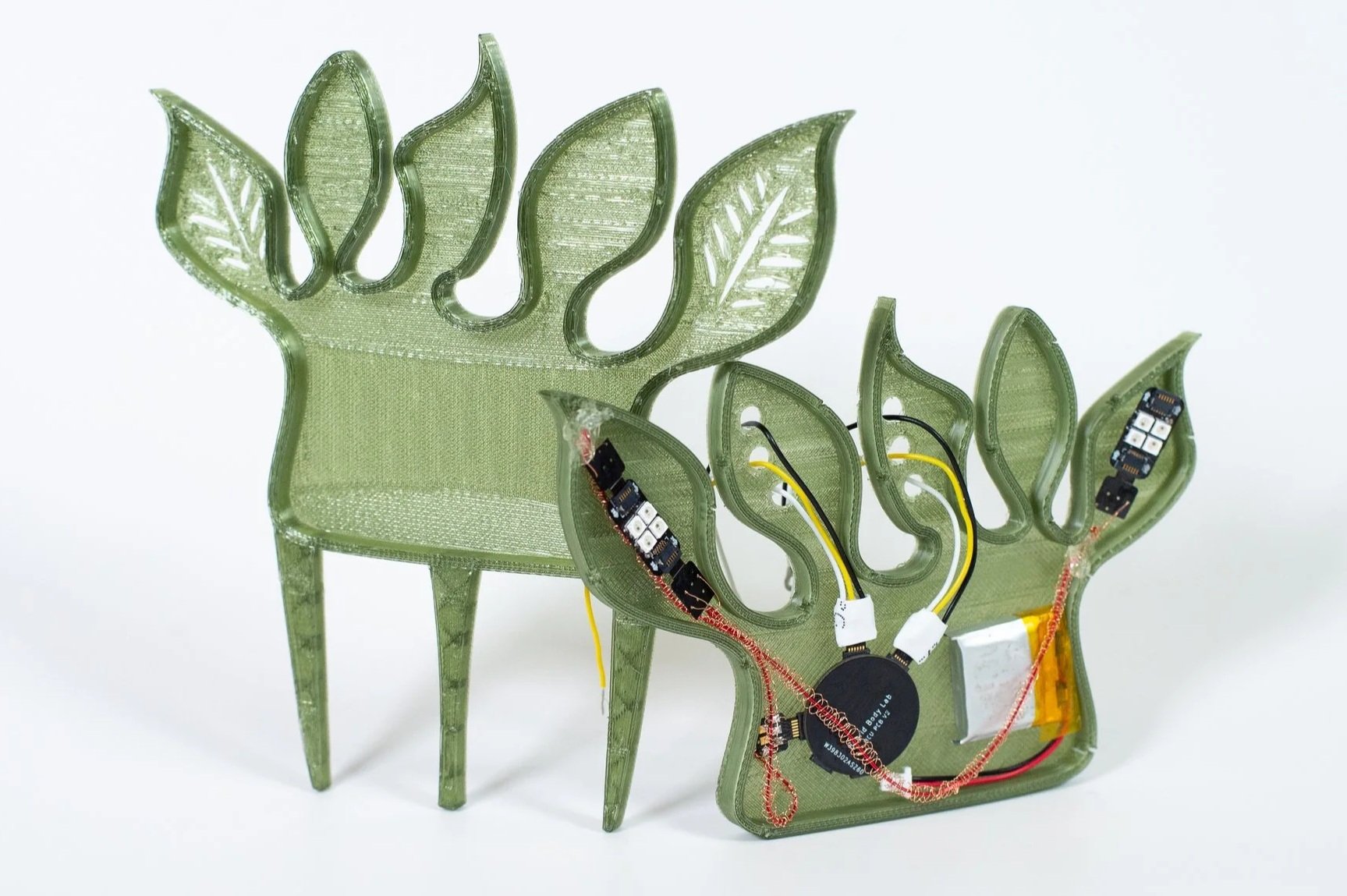
  3. 3D printed comb enclosure

  4. 3D printed anchor

  5. Clear nail polish

CONSTRUCTION

Braid Conductive Threads

  1. Add six strands of conductive threads to the anchor, coat the top 3cm of conductive thread with clear nail polish to insulate them.

  2. Use the anchor to separate the conductive threads, seprate the hair into three strands and put one conductive thread into each of the strands

  3. Braid two dutch braids, ensure the conductive threads are not shorting during the braiding process by using a multimeter to test continuity.

SkinLink Circuit Preparation

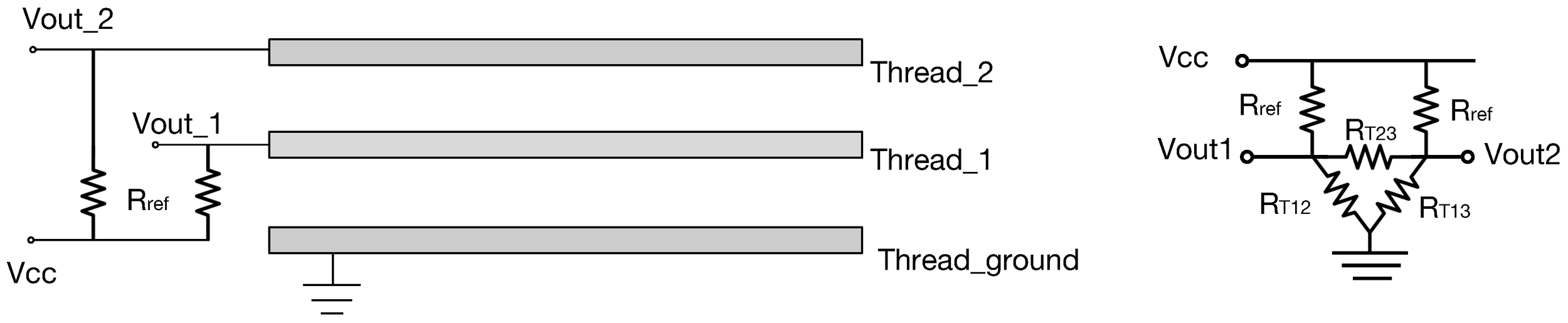
  1. Solder 1MOhm resistor to the SkinLink connector modules based on the circuit diagram from https://www.mdpi.com/1424-8220/18/11/3775

  2. Assemble SkinLink modules as shown in the image below

Hardware-Threads Connection

  1. Connecting each end of the conductive thread to the SkinLink hardware through crimps.

  2. Insert the comb to the bottom of the braids.
Dancing Hair Tutorial

TOOLS AND MATERIALS

  1. Premade Crochet Braids (16in or longer)

  2. Large Mesh Elastic Crochet Cap

  3. 12mm Round Beads (around 30)

  4. 6 Pieces of Shape Memory Spring, 8 cm long, 0.5cm(5mm) coil diameter , 0.15 wire diameter, Pitch: wire size x2, transition temp 45C

  5. Sillicon covered stranded wires

CONSTRUCTION

Prepare Shape Memory Alloy Springs

  1. Use crimp connectors to connect each end of the SMA coils for easy soldering.

  2. Insert SMA coil into a shrink tube for easy threading.

Braiding and Bead Attachments

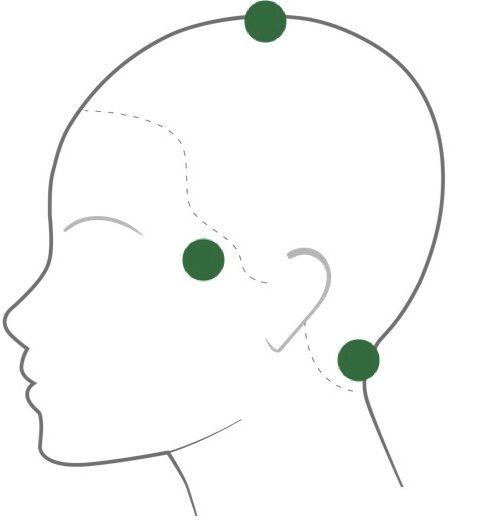
  1. Thread the tube through the braid and beads in targeted areas: temple, top of head, and nape as shown in the diagram below.

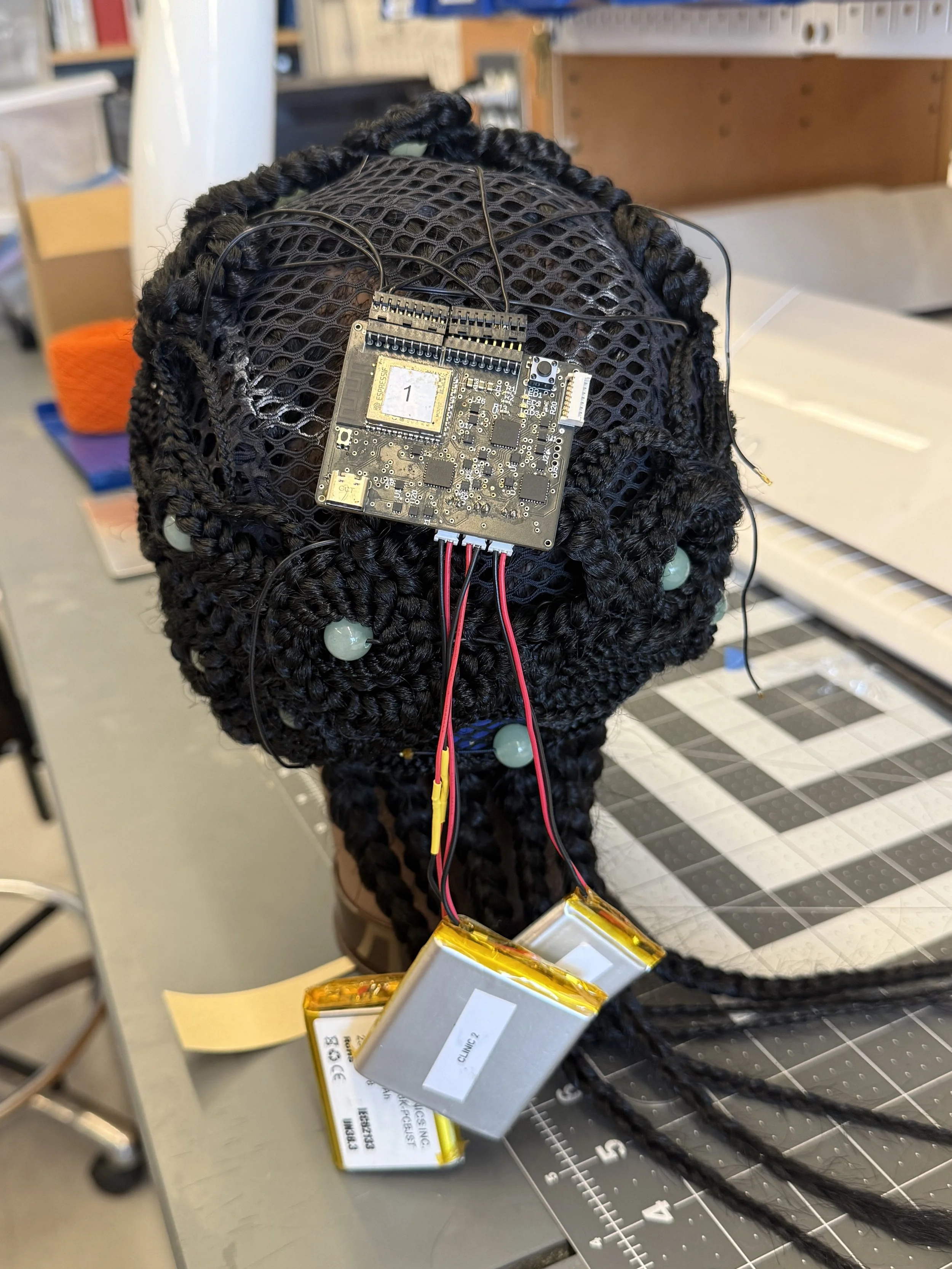
  2. Solder the SMA coil to wires, and connect the wires to the hardware from EdemaFlex (Link)

  3. Drape the braids onto the mesh cap using pins, leave large area in the top of the head for hardware, and sew the braids after completing draping.

Garden Rows Tutorial

TOOLS AND MATERIALS

  • 150 ml glass beaker

  • Syringe

  • 4.5 g of sodium alginate

  • 7.5 ml of glycerine

  • 150 ml of water

  • 3.75 ml of sunflower oil

  • 600 ml of 10% calcium chloride solution

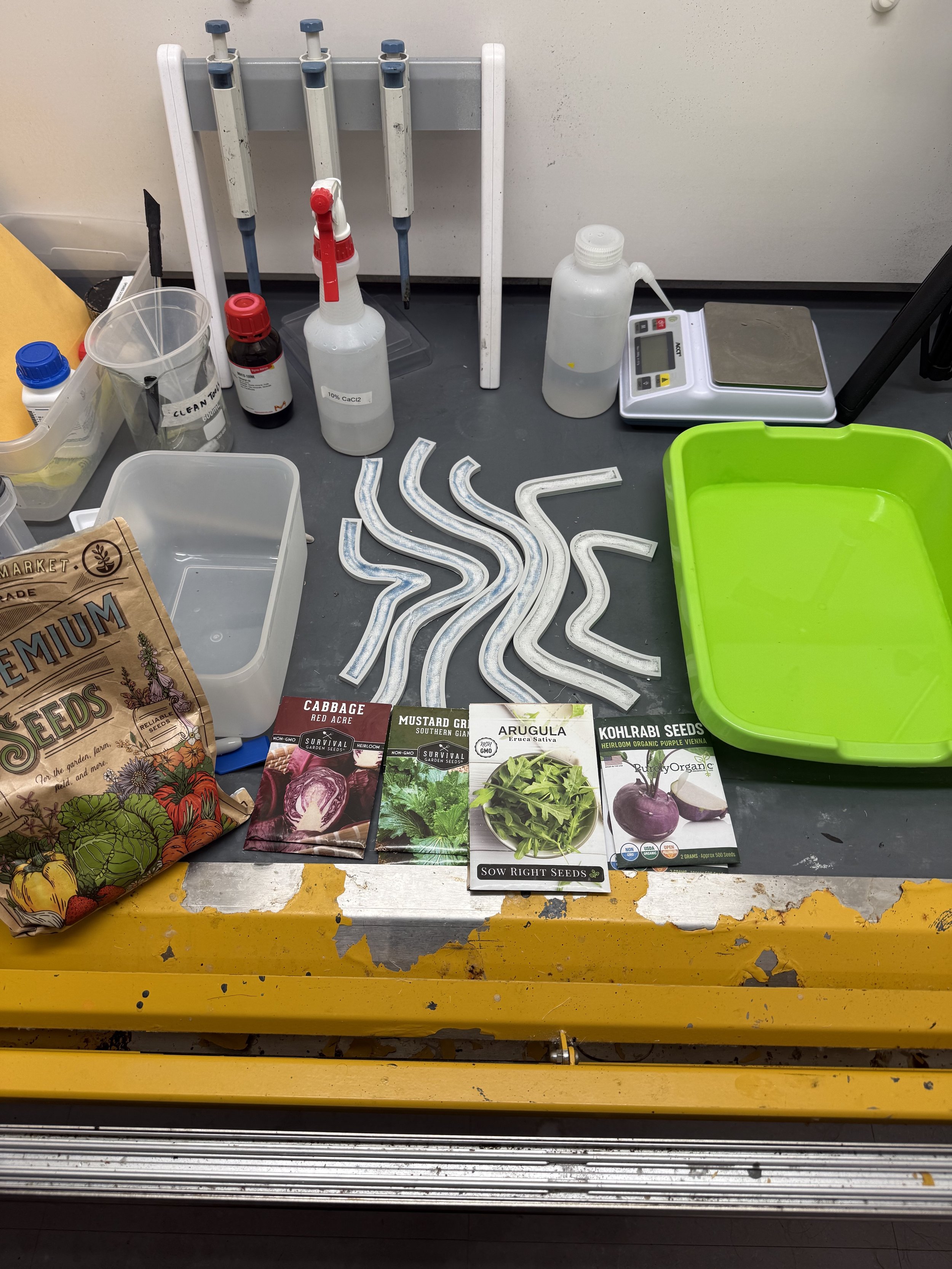
  • micro-green seeds (chia, arugula, purple cabbage, mustard, kohlrabi)

  • full lace human hair wig

  • cheese cloth

  • 3D printed molds

  • food processor

  • vacuum sealer

  • a large liquid container for coagulation solution

  • Large plastic shower cap

  • Skin Safe Silicone Based Adhesive

CONSTRUCTION

Prepare 3D Print Mold

  1. Download the 3D models and print them with PLA filaments.

Prepare Biofilm Mixture

  1. Add the glycerine, water, and oil to the food processor.

  2. Add in alginate, mix until all lumps are removed.

  3. Put mixture in the beaker.

  4. Heat the mixture in a 60 degrees Celsius lab oven for 20 minutes.

  5. Place the mixture in a vacuum sealer for 30 minutes.

Casting & Curing

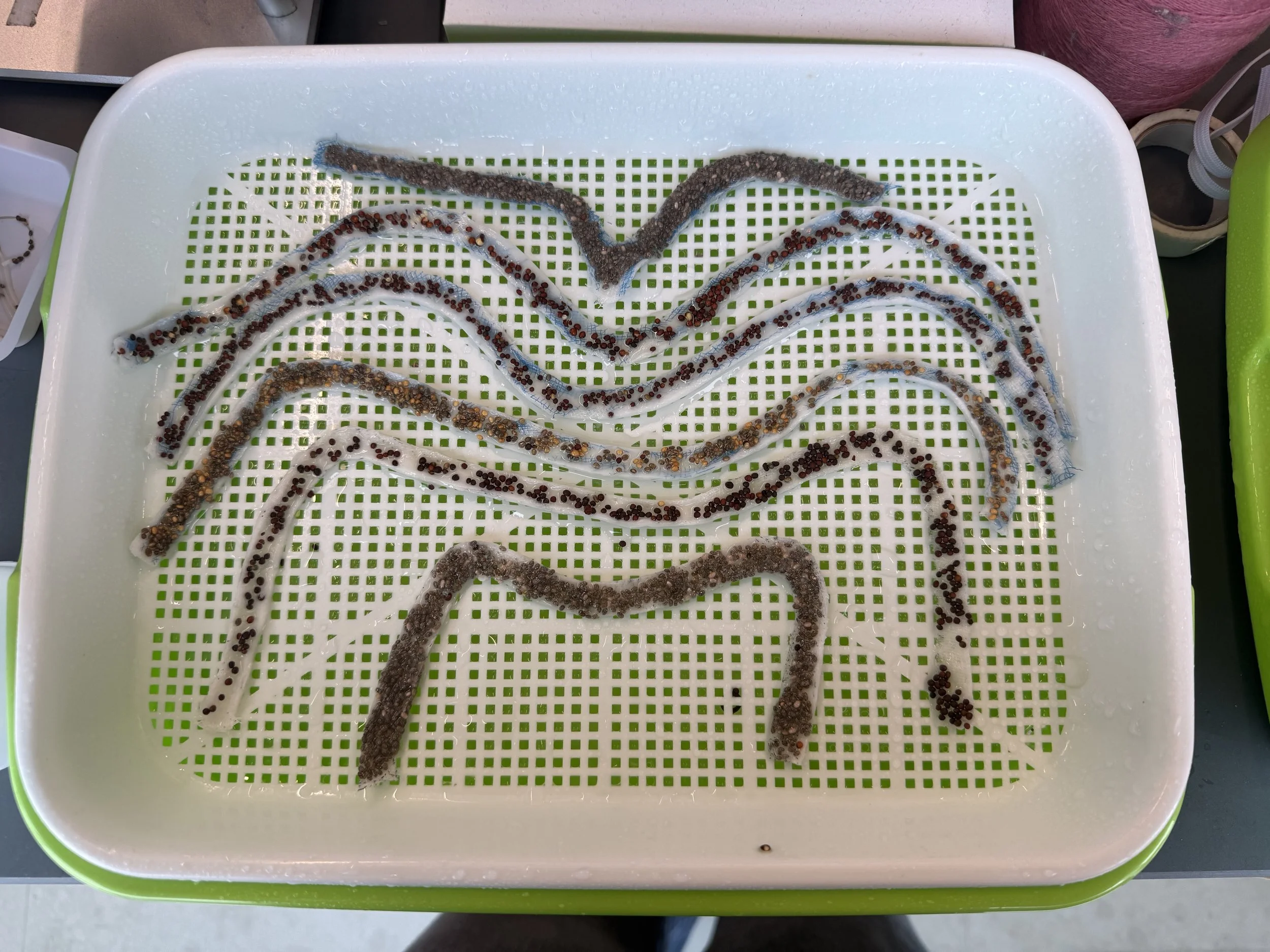
  1. Cut the cheese cloth to fit in the bottom of each mold.

  2. Add the mixture to the syringe, and fill each mold with the mixture.

  3. Sprinkle seeds on top of mixture, one type of seed for each mold, two molds for chia seeds

  4. Spray each mold with a generous amount of 10% CaCl, and place the lids on them.

  5. Put 500ml CaCl in a large container, dip each mold with the lid attached inside the solution.

Growing & Assembly

  1. Place the biofilm in a dark and humid container for 3 days.

  2. Wash, shampoo, and blow dry the wig.

  3. Part the hair in 6 sections based on the 6 biofilm shapes.

  4. For each braid, part each section in half, place biofilm in the center, then begin corn rows braiding.

  5. After all braids are completed, spray the hair generously with water.

  6. Cover wig in shower cap and placed in sunlight for 7 days.

Hair APPLICATION

  1. Braid models hair into 2 french braids and wrap around the head

  2. Wrap hair with plastic wrap

  3. Place wig cap matching the model’s skin tone over plastic wrap

  4. Cut excess lace from the wig.

  5. Apply skin safe silicone adhesive all around the hairline and allow to become tacky. (Blowdryer helps)

  6. Apply the wig and stick to adhesive one small area of the hairline at a time (hold firmly in place for 30 seconds.)